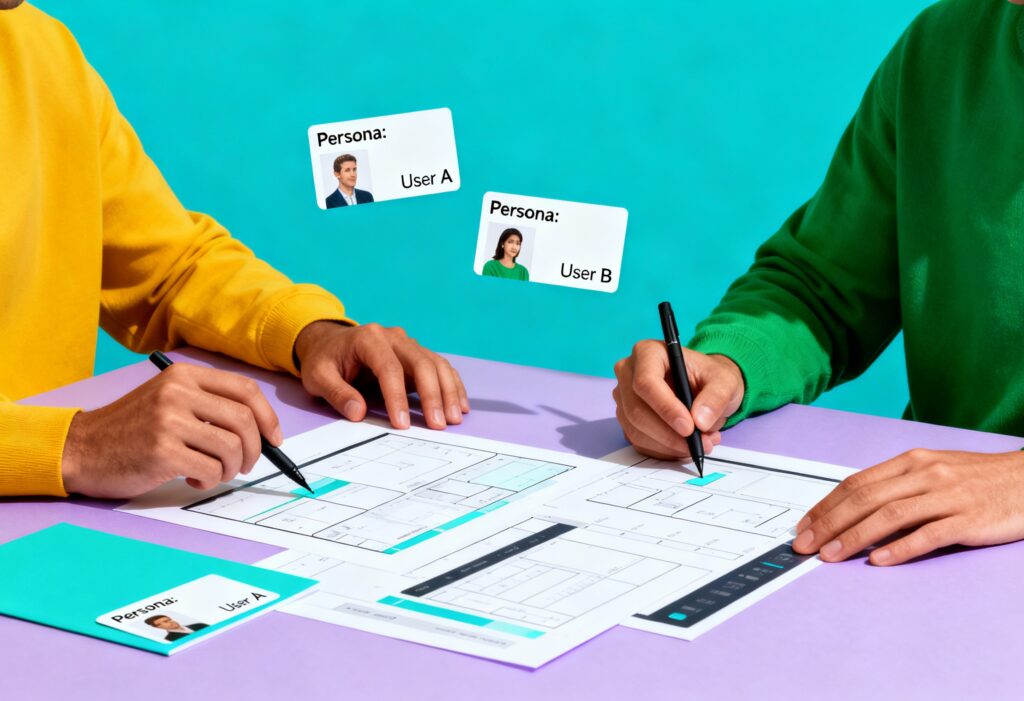
Behind every click, scroll, and purchase is a person making a decision. Yet many websites and digital products are still built from the inside out, shaped by what a business wants to say rather than what users actually need. That’s where user personas come into UX website design.
Personas turn data and numbers into people, creating research-based relatable stories that help teams understand how users think, what they value, and what frustrates them. By designing with those perspectives in mind, you create digital experiences that feel effortless and genuinely useful.
What Are User Personas?
A user persona is a realistic snapshot of the people who use your product or website. It blends genuine research, behavioural insights, and customer feedback to capture how a particular group thinks, feels, and interacts with your brand. A well-defined persona captures the goals, frustrations, preferences, and motivations of your ideal users.
Although fictional, personas represent real people in your target audience. They often include:
- A name and image to make them memorable
- Demographic and background information such as age, role, or location
- Behaviour patterns and usage habits
- Motivations, goals, and pain points
- Common quotes or remarks from user interviews
- Environment, devices, and level of technical skill
Instead of referring to “users aged 30 to 45 who visit twice a week,” a persona brings clarity by turning that data into a relatable profile such as “Maria, 37, a marketing manager who wants to check reports quickly during her lunch break.” Personas help teams design business websites with connection and empathy rather than assumptions.
Why User Personas Are Essential in UX Web Design
Without clear personas, design choices can easily drift toward personal opinions or assumptions. Personas replace that uncertainty with clarity and purpose. They act as a framework that keeps everyone focused on what really matters.
- They help teams design for real people instead of vague user types.
- They bring consistency and shared understanding across every department involved.
- They shape decisions by encouraging teams to ask, “Would this help Maria reach her goal?” instead of, “What do we like best?”
When used properly, personas keep your web project grounded in genuine user needs. They stop the design from becoming an internal preference exercise and make sure your final product stays practical, relevant, and aligned with your audience. Research from UX specialists shows that businesses that use well-developed persona frameworks make more consistent and user-focused decisions throughout the website design and development process.
How Personas Improve Decision-Making and Outcomes
When your team clearly understands your users, every design decision becomes more targeted and effective.
Setting Priorities
With personas in place, it becomes easier to decide what deserves attention and what can wait. Every proposed feature can be tested against real scenarios: Will this change actually improve Maria’s buying experience? Does it make sense for John’s level of technical understanding? This practical approach keeps your design lean, purposeful, and centred on the user.
Creating Team Alignment
When everyone from clients to designers to developers shares the same understanding of the user, collaboration becomes easier and mistakes and miscommunications are reduced. Personas make that possible by replacing differing opinions with a clear, collective vision of who you are designing for and why specific features matter. This helps stimulate focused and helpful ideas, reduces time and resource wastage, and makes decisions clearer.
Testing with Accuracy
When conducting usability testing, personas guide you to recruit the right participants and design realistic test scenarios. A design tested with people who reflect your target personas will provide more accurate insights than a generalised test audience.
Strengthening Communication
Clear communication is almost always one of the biggest challenges in any web design project, which makes sense! Stakeholders want to understand why certain choices are made and why their money is going into certain features, not just what they look like. Personas make that conversation much clearer and give you a better vision of the outcome. Instead of being caught up in low-priority details or debating abstract features or tools, discussions become about giving practical solutions to real user problems. This aligns teams more effectively, creating a shared understanding as well as a sense of trust and a willingness for collaboration, keeping everyone focused on creating an experience that works in the real world.
Measuring Success
Personas not only guide design decisions but also make it easier to measure the performance of these decisions. When user goals connect to specific metrics, you can quickly get to the root of how your design is performing for each audience group. For example, if Maria’s goal is to download a report quickly, you can track how long that process of finding and downloading it takes her. If John needs a simple purchasing process, how quickly he can find a product, add it to his basket and pay for it becomes a clear sign of progress. This targeted approach transforms user insights into measurable outcomes and helps refine the experience over time.
Example User Personas
Here are two examples to illustrate how personas work in practice.
Persona 1: Maria, the Busy Marketing Manager
- Age: 27
- Role: Unmarried Sales Manager at a medium-sized accounting software company in London
- Goal: Access data insights in under two minutes
- Frustration: Complicated dashboards and unclear navigation
- Behaviour: Logs in on her phone in the morning, uses her desktop for in-depth work
- Quote: “I need answers quickly so I can move on to the next task.”
Persona 2: John, the Discerning Investor
- Age: 29
- Location: Manchester
- Occupation: Married Financial Manager at a UK investment firm
- Goal: Purchase high-end tech, fashion, and lifestyle products that reflect luxury quality, craftsmanship, and his lifestyle
- Frustration: Overly busy websites, vague product specifications, and poor after-sales support that undermines trust
- Behaviour: Researches extensively before buying, reads expert reviews, and prefers brands with transparent policies and premium presentation
- Motivation: Values reliability and detail, and wants assurance that his investment in luxury goods matches the standard he expects in his professional life
- Quote: “If a brand expects me to invest in it, I expect clarity, precision, and proof of quality in return.”
By applying these profiles throughout the design process, you ensure every layout, feature, and piece of content supports the right audience goals.
How to Create Effective User Personas
To develop useful, accurate personas, you’ll need structured research and analysis. Below are the key steps.
1. Gather Qualitative and Quantitative Data
Start by researching who your audience is and what they want, including looking at the audiences your competitors are attracting:
- Online interviews and surveys through your mailing lists
- Website analytics and behavioural data
- Tracking user interactions with your website
- Looking through support queries and feedback
Personas should always be based on facts, not assumptions. Using both data and direct user input ensures your profiles reflect real motivations and challenges.
2. Identify Patterns and Segments
Once you have the data, look for common trends and group users by shared characteristics. These clusters often form the foundation of your personas. For example, you might find one group prioritises convenience and another values depth of information.
3. Build the Persona Profile
Once you have your research and key audience segments, it’s time to turn your data into examples of real people. Include:
- A name and image: Give your persona an identity that’s easy to remember and relatable across your team.
- Background details: Include role, location, company type, or lifestyle context relevant to your industry. For B2B, mention job responsibilities and decision-making influence. For B2C or eCommerce, outline lifestyle, values, and purchasing habits.
- Primary goals and frustrations: Define what success looks like for this person and what obstacles prevent them from achieving it.
- Key behaviours and environment: Note how they interact with your product or service, including device use, browsing patterns, and buying habits.
- Direct quotes: Add quotes from real customers from interviews or surveys that reflect how they think and feel.
At every stage, keep in mind that the aim is to make every design or marketing decision traceable back to a person your team understands and not a generic “user.”
4. Validate and Refine
Share the draft personas with your wider team and test them against new insights. As more data comes in, update them to ensure they remain accurate and useful. Personas should evolve as your audience or product grows.
5. Use Personas Throughout the Design Process
Personas only deliver value if they are used at every point in the decision-making process. Refer to them in workshops, design reviews, and strategy meetings. Ask how each design choice serves specific persona needs. This practice keeps your product aligned with user goals from start to finish.
Best Practices for Persona Development
Creating effective personas takes more than filling in templates. The goal is to make each persona both believable and actionable. Here are best practices that ensure your personas guide decisions rather than sit in a presentation deck.
Base every persona on verified research.
A strong persona begins with data, not assumptions. Use interviews, surveys, analytics, and usability studies to uncover real behaviours and pain points. Avoid letting internal opinions or marketing stereotypes shape the narrative. Personas grounded in solid evidence will always hold up better under scrutiny and guide smarter choices.
Represent people, not caricatures.
A persona should reflect genuine human diversity without exaggeration. Avoid clichés, overly specific hobbies, or irrelevant personal traits that add colour but no insight. The purpose is clarity, not character-building.
Focus on motivations, goals, and barriers.
The most useful personas explain why users behave the way they do. What motivates them to act? What stops them from completing a task? These insights influence navigation, tone of voice, and functionality more effectively than demographic data alone.
Limit your set of personas.
Having too many personas can dilute focus and confuse design priorities. Aim for a manageable set of four or five that capture distinct audience groups. Each should represent a meaningful difference in needs or behaviours, not minor demographic variations.
Treat personas as living documents.
User needs evolve as markets shift, technologies advance, or customer habits change. Review and update your personas regularly—ideally every six to twelve months or after major product updates. An outdated persona can be more damaging than none at all.
Make personas part of everyday workflows.
Encourage teams across departments to refer to personas in planning, design, content creation, and marketing. Integrate them into project management tools, sprint boards, and design reviews so they become a consistent point of reference.
Combine technology with human insight.
Many teams now use analytics dashboards, heatmaps, and clustering tools to help identify user segments. These can highlight trends, but they cannot interpret emotion, intent, or nuance. The most valuable personas come from blending data analysis with professional judgement, observation, and empathy. Machines can group patterns, but only human insight can turn those patterns into meaningful stories that shape design decisions.
What Happens When You Skip Persona Work
Starting a project without defined personas is a bit like building a house without detailed plans. You can keep adding rooms and features, but eventually, something won’t fit and the end result won’t flow. Without a clear understanding of who you’re designing for, even the most polished product can fall flat once it reaches real users.
When teams skip persona development, the impact shows quickly:
- Features that miss the mark: Additions made on instinct rather than need often clutter the experience instead of improving it.
- Mixed messages: Each department interprets “the user” differently, resulting in tone and content that don’t quite align.
- Design friction: Smooth journeys become stumbling blocks when they don’t match how people actually browse or buy.
- Disconnected marketing: Campaigns attract attention but fail to convert because they don’t reflect real motivations.
Skipping persona work might feel like saving time, but it usually creates more problems later. Taking the time to define your users early helps every decision serve a genuine purpose and connect with the people who matter most.
User Persona-Driven UX Design – A Key ROI Driver
Great UX design is more than attractive layouts or smooth animations. It’s about anticipating what users need before they ask.
At Yellowball, we use persona-driven strategies to uncover how people think, navigate, and make decisions online. Our designers and developers work closely with you to transform those insights into websites that perform beautifully across every device. The result is a digital experience that converts visitors into loyal customers and leaves a lasting impression.
Yellowball has extensive experience designing and developing high-performing websites for businesses large and small across all industries, from professional services and e-commerce to education, construction, and creative sectors. Whether we’re building a complex WordPress platform, e-commerce website, or a fully custom Laravel site, every project is designed around the people who use it.
Discover how our user-focused approach can transform your business. Give us a call today and let’s get the ball rolling!