
Starting with a new agency should feel like progress, but too often it feels like handing over a folder and waiting. Momentum stalls when access is missing, priorities are vague, or the kick-off process fails to create shared ownership. This checklist helps marketing managers protect the first month of delivery. Use it for web, SEO, or media work with your digital agency, and you will reduce friction, speed up decision-making, and maintain high quality.
Why agency onboarding goes wrong so often
The most common causes of slow starts have nothing to do with talent. It comes down to three avoidable problems.
- Missing access. The agency cannot begin until key accounts, CMS permissions, analytics, tag managers, server logs, or ad accounts are handed over. That can take days or weeks if not planned.
- Vague goals. A proposal and statement of work give scope, but not the real priorities. Without clear, short-term goals, the agency makes safe choices that do not align with the business’s needs.
- Unclear ways of working. Who approves creative? How often do teams meet? What counts as a change request? If these rules are unclear, every decision becomes a debate.
Fix those three, and you remove most of the initial drag. The rest of this article shows practical steps and an explicit checklist you can use on the day the contract is signed.
What needs to happen before kick-off
Treat the period after contract signature as an operational handover. This is not about sales niceties. It is where delivery starts.
Access, context, stakeholders, priorities
- Produce an access list. Include CMS admin, hosting control panel, Google Analytics or GA4, Google Tag Manager, Search Console, Webmaster tools for other platforms, Google Ads or other ad platforms, social admin accounts, email service provider, CRM, SFTP/SSH, server logs, and any third-party integrations. For websites, add a DNS provider and SSL certificate access. For PPC, include billing owner details. Create credentials using a secure password tool and set expiry or role limits where possible.
- Share context documents. Give strategy briefs, brand guidelines, technical constraints, user research, persona summaries, previous campaign performance, and any compliance needs. PDFs, Figma files, and drive folders work best if organised.
- Confirm stakeholders. List names, roles, decision rights, and contact details. Use a simple RACI table: Responsible, Accountable, Consulted, Informed. This avoids late-stage surprises when someone with sign-off appears for the first time.
- Prioritise outcomes. Rank three immediate priorities for the first 30 days and three for the first 90 days. For a web project, the first 30 days might include discovery, a hosting check, and a wireframe sign-off. For SEO, it could be crawl analysis, CMS fixes, and baseline KPI tracking.
The first 14-day checklist
Reduce the first two weeks’ chaos with a short, focused plan. Here is a practical sequence that helps the agency deliver from day one.
Meetings, decisions, data, and working rules
Day 0 to Day 2
- Share the access list and confirm the delivery owner. Use a secure credentials method and note any approvals needed for account transfers.
- Send the project brief and priority list. Include the top three business goals so the agency can align initial work.
- Schedule the kick-off meeting. Keep it to 60 minutes and circulate the agenda in advance.
Day 3 to Day 5
- Hold the kick-off meeting. Cover project timeline, scope, 30/60/90 day priorities, key risks, the stakeholder RACI, and immediate milestones.
- Agree on ways of working. Decide meeting cadence, reporting format, file locations, version control, and escalation paths. Clarify single points of contact for approvals and creative queries.
Day 6 to Day 10
- Validate access. Confirm that the agency has the necessary permissions and that tracking and analytics are visible. For SEO projects, we recommend conducting an early audit and establishing a KPI baseline. See our SEO dashboard guide for which KPIs to track.
- Deliver initial discovery outputs. The agency should submit a discovery summary or gap list that highlights immediate risks and quick wins.
Day 11 to Day 14
- Make the first decisions. Approve the discovery findings so the agency can start remediation or design work. Decisions might include fixing crawl errors, updating ad creatives, or approving sitemap changes.
- Establish reporting and tracking. Confirm how weekly updates will look and how performance will be shared. For paid media work, align on lead definitions and conversion tracking; our PPC lead-generation guide includes practical metrics and setup tips.
What to align early if you want better results later
Early alignment constrains confusion later. Focus on three areas that most influence outcomes.
KPIs, reporting, approvals, feedback loops
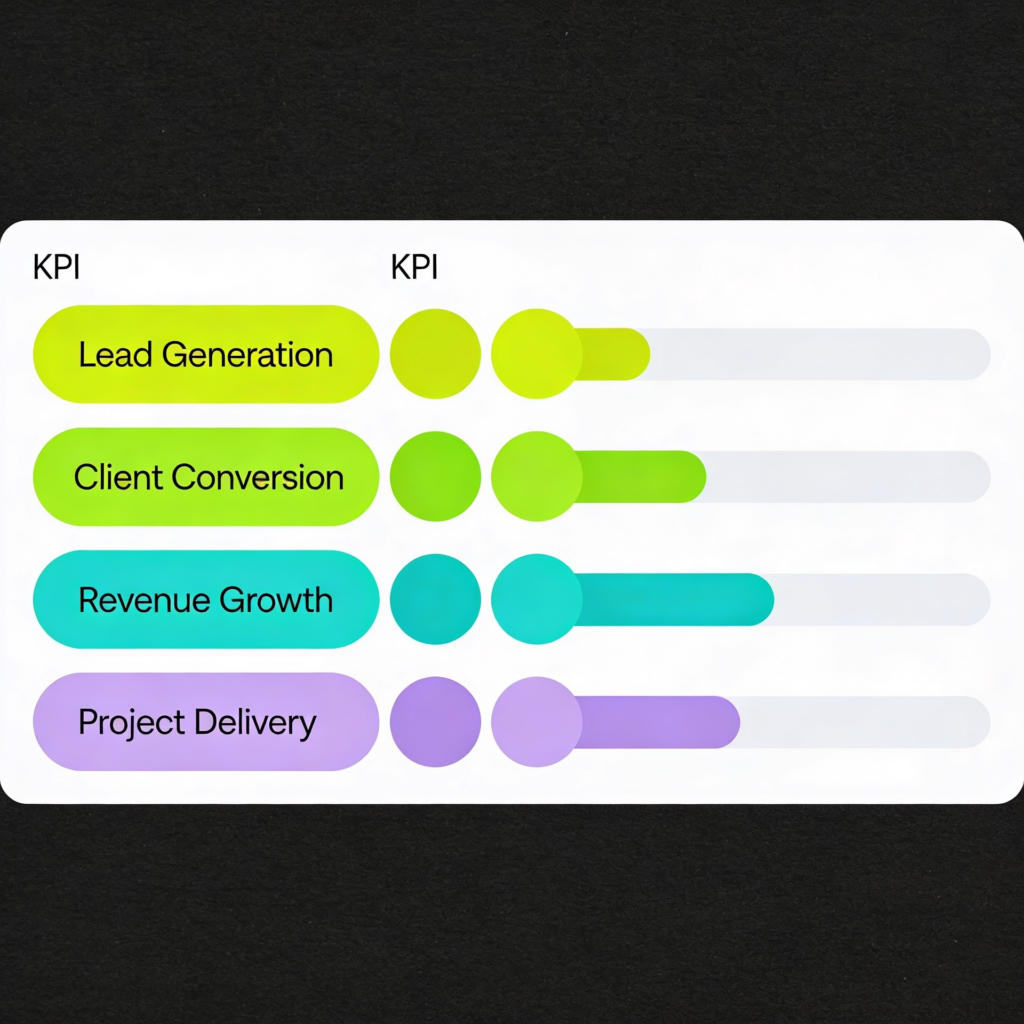
- KPI setting. Translate business goals into measurable outcomes. For SEO, use organic sessions, visibility index, keyword clusters, and conversion rates. For web design, use task completion, bounce rate, and journey conversion. Keep KPIs to a manageable number and specify how you will measure them.
- Reporting cadence and format. Decide what will be reported, how often, and which visualisations to use. Set a template for monthly performance reports and a quick weekly summary. If you need dashboards, ask the agency to provide them or to provide raw data access for your in-house analyst.
- Approval process. Define fast and slow tracks. Fast track for emergency fixes and urgent ad variations. Slow track for final creative or significant scope changes. Set maximum response times for approvers, for example, two working days for routine approvals and five working days for major sign-offs. Put this in the project governance document so everyone knows the rules.
- Feedback loops. Build short cycles for iteration. Use shared boards or comments on designs, and set clear deadlines for agency revisions. For media campaigns, agree on cut-off points for optimisation and budget shifts.
Common onboarding mistakes that create months of drag
Avoid these recurring errors.
- Overloading the kick-off. A long meeting trying to solve every detail burns energy. Keep it focused on alignment and immediate decisions.
- Storing files everywhere. Use a single source of truth and stick to it. Scattered files mean lost time and duplicated work.
- Missing the approvals map. Not knowing who signs off on creative or budgets causes bottlenecks. Map authority early.
- No risk register. Small technical debts become big problems when ignored. Track risks, owners, and mitigation actions from day one.
- Ignoring tracking. Without accurate tracking, you cannot measure impact. Confirm analytics and conversion events before any launches.
- Delaying quick wins. Fix low-effort technical issues early. That builds trust and shows progress.
A simple onboarding tracker that marketing teams can use
A lightweight tracker helps you control progress. Use a spreadsheet or the project management tool you prefer. Include these columns:
- Item. Short description such as “CMS admin access” or “GA4 property access”.
- Owner. Person responsible for completing the item.
- Due date. When the item should be completed.
- Status. Not started, in progress, blocked, complete.
- Priority. Critical, high, medium.
- Notes. Any relevant details, including approval requirements or security constraints.
Start with these rows for the first 30 days:
- Contract signed and SOW confirmed
- Access list completed and credentials shared
- Kick-off meeting held and minutes distributed
- Discovery/reporting baseline delivered
- GA4 and tag manager visible to agency
- CMS and hosting access confirmed
- SEO crawl and technical report completed
- Initial wireframes or campaign creative drafts shared
- Risk register created and reviewed
- Approvals map documented and signed off
- Weekly progress meeting scheduled
- Monthly KPI dashboard agreed
Review the tracker in your weekly check-ins. Use the status column to highlight blocked items so they receive immediate attention.
Final practical checklist to copy
- Send the access list within 24 hours of contract signing.
- Schedule a 60-minute kick-off within the first week.
- Share a three-point 30-day and 90-day priority list.
- Confirm RACI and approvals map within seven days.
- Validate analytics and conversion tracking before any launch.
- Deliver discovery outputs within ten days and resolve critical risks by day 14.
- Agree on reporting templates and dashboard access by day 14.
- Create a risk register and update it weekly.
- Set response SLAs for approvals and changes.
This approach protects momentum, reduces rework, and increases accountability. Use the checklist as a live tool rather than a one-off document. A tight kick-off makes the first 30 days a period of progress rather than firefighting.
Experienced digital agency and web design specialists in the UK
When you choose Yellowball, you work with a boutique web design and digital agency based in London that focuses on delivery as much as strategy, with over 250 successful websites and a 92% client retention rate.
We build WordPress, WooCommerce and Laravel sites, design UX and UI, provide white label development, and run SEO, AI SEO, paid media and graphic design programmes. Our team has experience with high-end UK and international clients, and we apply that experience to practical, measurable outcomes.
Our approach is hands-on and transparent. We use a tight kick-off process, clear access and tracking setup, and defined stakeholder and approval paths so work starts fast and stays on course. If you want an onboarding process that protects momentum and reduces first-month friction, contact our team at Yellowball. Let’s get the ball rolling!