In the past, WordPress sites generally grew through plugins rather than through a strategic growth plan. For example, when a client needed a feature, a developer simply installed a plugin for it. This approach helped teams move quickly at first, but it created long-term problems that are a headache for both web design agencies and clients. This has meant that the 2026 WordPress stack has moved in a different direction. Today, exceptional WordPress websites focus on lean builds, clean code, and a predictable foundation that delivers speed, security, and easier maintenance.
Developers and clients have learned through experience that plugin stacks rarely age well, leading to issues from site instability and reduced load speed to costly extra work. As a result, the modern WordPress stack relies on intentional architecture, lean custom development, and performance-led tooling. Don’t get us wrong: plugins still have a valuable place in web design, but only when they are chosen carefully and serve a clear purpose.
Why WordPress Needed a New Approach
The limits of plugin-heavy development
To understand the shift, it helps to revisit the old approach. Many teams used to treat plugins as shortcuts. This made sense when budgets were tight or deadlines were short because plugins offered quick wins. It also helped new users understand what WordPress plugins were in practical terms, and they could see how adding a plugin unlocked a feature without writing much code.
Plugins are easy to add, which is why many sites end up with far more than they need. This often leads to multiple tools doing similar jobs, scripts loading twice, and settings scattered across several screens, causing slower performance, a cluttered admin area, and a higher chance of update conflicts. Even well-built plugins can trip over each other in a crowded environment.
Another problem is long-term sustainability. Plugins often change ownership or direction, and support can fade. Agencies struggled with this because they needed predictable foundations, not volatile dependencies.
Rising expectations for speed, security, and maintainability
Today’s web users expect fast-loading websites as standard, and this also influences search visibility, conversions, and user satisfaction as a result. A plugin-heavy site struggles to meet these expectations because it carries unnecessary weight. Extra scripts, unused styles, and outdated code all contribute to slower performance and poor user experience.
Security also plays a major role in the shift away from reliance on plugins. Each additional plugin increases the attack surface. When agencies talk about which WordPress plugins to use, they now consider security a key consideration.
Maintainability rounds out the trio. Modern development teams want clean builds that can be updated without surprises. They want code reviews and automated testing to work consistently. They want clear ownership of each part of the site. The older approach made this problematic.
This combination of pressures set the stage for a new WordPress stack that agencies trust.
The Core of a Modern 2026 WordPress Stack
Custom components over plugin dependencies
One of the most significant changes in 2026 is the renewed focus on custom development. Agencies still ask what WordPress plugins are good for, but they now answer that question more carefully. Plugins remain useful for complex functionality that would be expensive to build from scratch, such as multilingual systems or advanced eCommerce. For everything else, teams prefer custom components.
Custom components give agencies complete control over performance, markup, and accessibility. They avoid the overhead of bundled features that clients will never use. They also align more closely with design systems, which simplifies testing and future enhancements.
Where necessary, teams may still build features through plugins, but they often create their own. Learning how to create a WordPress plugin has once again become an essential skill for developers who want complete control over their architecture.
Smarter use of the block editor and theme.json
The block editor has matured significantly. The release of the Twenty Twenty Five theme reflects this shift. Agencies now rely on WordPress themes to manage spacing, colour palettes, layout rules, and typography in a structured way. This avoids the tangle of CSS overrides that used to accumulate across multiple stylesheets.
Teams also build custom blocks rather than installing block libraries. This reduces bloat and ensures consistent design patterns. As the component library grows, so does the team’s efficiency. Designers and developers work from the same set of information, resulting in neater sites and faster builds.
When and when not to go headless
Headless WordPress gained attention over the last five years, but agencies are more selective with it today. It works best for complex platforms that rely heavily on JavaScript frameworks, advanced front-end interactions, or multi-channel publishing.
However, headless setups entail additional maintenance overhead and higher development costs. Many agencies now use a hybrid approach. They keep WordPress as the backend but reserve headless routes for specific sections or features. Simpler marketing websites still rely on traditional theming for speed and cost effectiveness.
This balanced approach avoids turning every project into a custom application. It keeps WordPress accessible while offering flexibility for advanced builds.
Essential Tooling Agencies Rely on Today
Performance first build setups
A modern stack puts performance at the centre. Agencies now test with Lighthouse, WebPageTest, and Real User Monitoring from the beginning of a project rather than at the end. Build tools automate script optimisation, tree shaking, and image processing. Caching strategies handle dynamic content efficiently.
Teams still use plugins to improve performance where appropriate, but do so strategically. When exploring what WordPress plugins improve speed, guides like Yellowball’s plugin recommendations for site speed help teams avoid unnecessary tools.
Automated testing, CI/CD, and code quality checks
Continuous integration is now standard practice in agencies that produce reliable WordPress builds. Every commit triggers automated tests that check PHP standards, JavaScript linting, and accessibility. Unit tests and integration tests catch issues long before they reach staging.
CI pipelines improve accountability because the team can track which change introduced a problem. They also help new developers onboard quickly because they learn the project’s standards immediately.
The role of design systems and shared component libraries
Design systems were once reserved for large organisations, but agencies now use them on projects of all sizes. Shared component libraries align front-end code, Figma assets, and block development. This reduces inconsistency across pages and speeds up development.
Reusable components also help teams avoid third-party block plugins. With a strong component library, the team understands what they can build quickly without relying on plugins that add extra weight.
Reducing Risk and Increasing Scalability
Minimising plugin sprawl for long-term stability
One of the most important goals of today’s WordPress stack is predictability. Fewer plugins make a site easier to update and easier to debug. Clients no longer need to worry about features breaking when plugin authors change direction. Agencies can create long-lived builds that survive several years of updates with fewer interventions.
For teams still figuring out what WordPress plugins to keep or remove, Yellowball’s overview of recommended plugins and tools provides a sensible baseline.
Security benefits of controlled tech stacks
Security improves when teams keep the stack clean. Fewer plugins mean fewer vulnerabilities. Custom code can follow strict standards. Controlled hosting environments offer hardened configurations and consistent monitoring.
Teams also create internal security checklists so developers know exactly how to secure forms, sanitise data, and configure user roles. This reduces the chance of human error and keeps sites safe during handovers.
Creating predictable builds for faster delivery
Predictable builds lead to predictable timelines. When agencies know how their stack behaves, they can estimate more accurately and deliver without chaos. QA becomes faster because the underlying structure is familiar across projects.
This predictability increases trust between agencies and clients. It gives both sides a foundation for a long-term partnership.
What This Means for Teams and Clients
Faster workflows, fewer surprises
When teams use clean, modern stacks, projects move faster. Developers reuse components. Designers rely on a clear system. QA tests consistent structures. Clients see fewer delays and fewer unexpected issues.
This shift also helps teams explain how to make a WordPress website in a more manageable way. They can show clients why certain decisions matter and how the build will grow over time.
More transparent maintenance and upgrade paths
Clients benefit from a clear website maintenance plan. Instead of guessing which plugins might break, they see a smaller set of dependencies with consistent support. Updates take less time. New features integrate more smoothly because the architecture is clean.
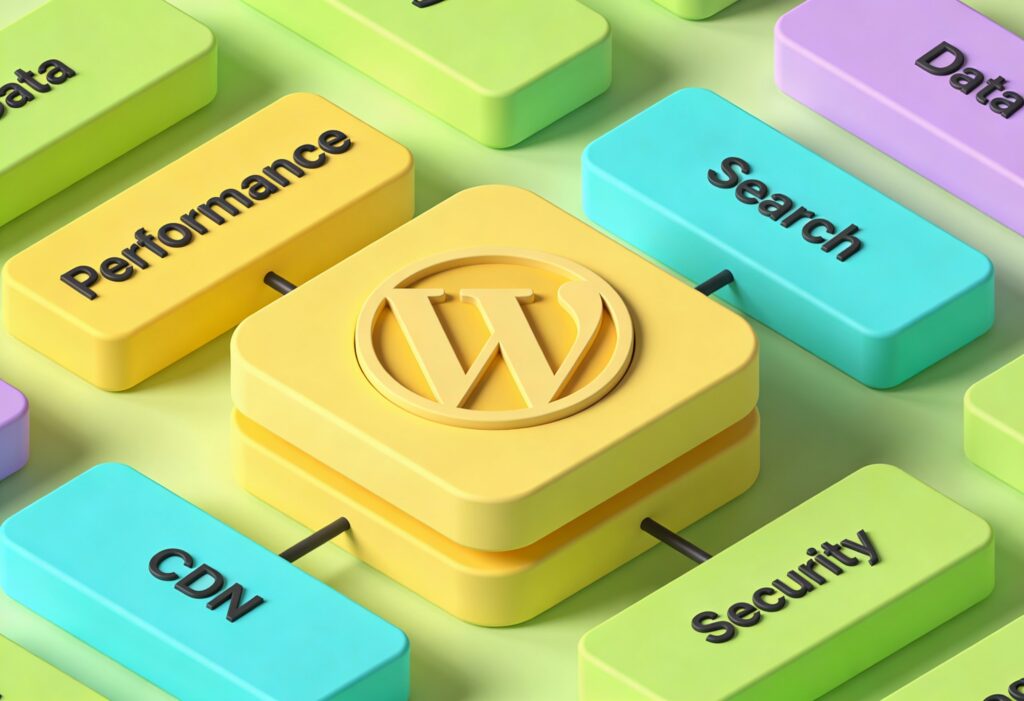
Teams can also explain what is a WordPress website in terms of a system with layers of responsibility. Core handles content management. Custom components handle the unique parts. A limited set of plugins handles specialised tasks. This clarity makes long-term planning far easier.
The Future of WordPress Belongs to Lean, Thoughtful Builds
The 2026 WordPress stack marks a shift in mindset. Agencies now value thoughtful planning, lean builds, and long-term sustainability. They understand what WordPress plugins are good for and where their limits begin. They know when to use custom development, when to adopt the block editor fully, and when to explore headless architecture. They prioritise performance, security, and predictable maintenance because these create reliable websites that serve clients for years.
At Yellowball, every WordPress site we build begins with your sector, your challenges, and your growth plans. We create tailored solutions that pair striking design with robust performance and search-friendly development. This combination gives you a website built to be found, engage, and convert. Our WordPress web design team brings deep expertise and a practical mindset to even the most complex briefs, with hundreds of high-performance web builds behind us. When you need a site that delivers impact, we are ready to partner with you. Ready to start your journey? Chat to our team today and get the ball rolling!