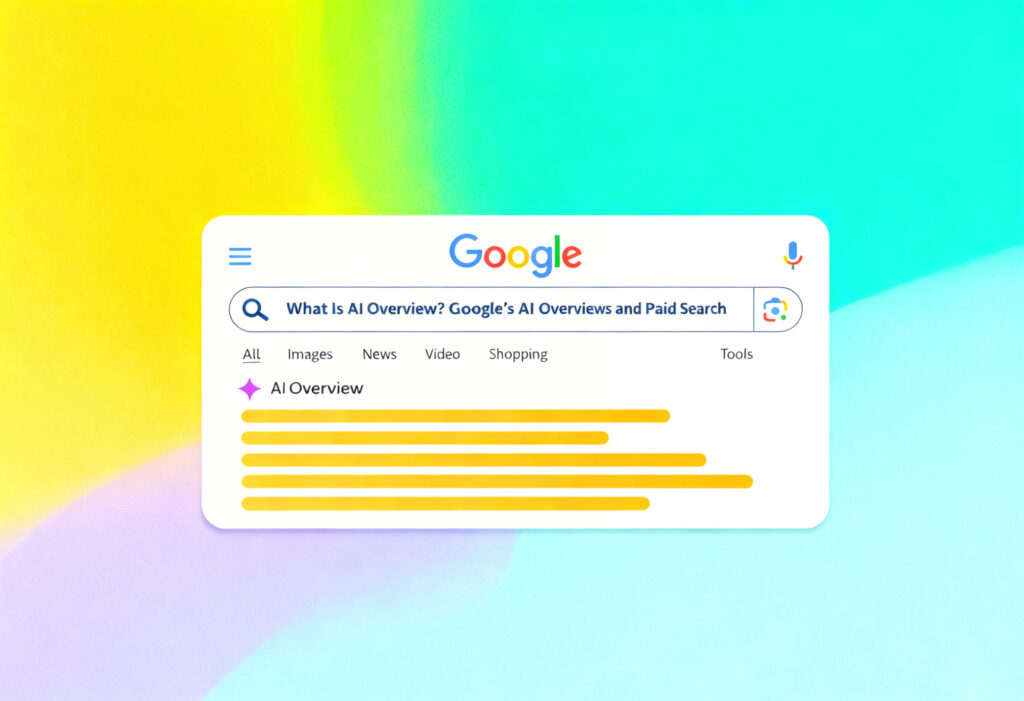

Search is evolving once more, and this time, Google has introduced a feature that is changing how people interact with results altogether. Known as Google AI Mode, it’s powered by Google’s own AI model Gemini and has been created to go beyond the traditional list of blue links. It provides richer, more detailed and conversational answers directly in search.
Users can simply select “AI mode” from the search menu, much like choosing “Images” or “News,” and receive instant summaries or direct answers. Gemini is Google’s large language model, which generates explanations, recommendations, and context around a search.
For businesses, this shift is significant. It means that people may engage with AI-generated summaries before deciding whether to click through to a website. In practice, Google AI Mode is designed to provide users with clear, accessible answers quickly, while still offering links for those who want to explore in more depth.
Shifts in search always come with its own challenges, but they also create chances to stand out. By learning how Google AI Mode works and crafting your own AI SEO strategy, you can make sure your business continues to be found.
How Does AI Mode Differ from Traditional Google Search?
Google has introduced AI Search Mode as a new way for people to search. Instead of scrolling through lists of results, users can see AI-generated summaries and tailored suggestions right away. This approach saves time and delivers information in a format that feels more natural and easier to understand.
The feature runs alongside traditional search results, with user adoption expected to grow. Getting ahead of the curve could give your business an edge over competitors.
Think back to when Google first introduced featured snippets. Those short answers appeared above the usual results and gave businesses a strong advantage. AI search is likely to have a similar, if not greater, effect.
If your business content is included in these summaries, you can increase visibility and trust. If it is not, there is a risk of losing valuable attention to competitors. That is why adapting your SEO strategy for AI Mode is becoming a priority.
Why AI Search Mode Matters for Every Business and Industry
The impact of AI search is significant because:
- User habits will shift: People may spend more time engaging with AI summaries than scrolling through links.
- Clicks could decline: If the AI answer is detailed, fewer users may click through to websites.
- Authority and trust will matter more: AI models draw on credible, well-structured information. Sites with strong authority and clear site architecture have a better chance of being referenced.
- Competition will intensify: Businesses that adapt early to AI search will dominate visibility.
For companies of all sizes, the question is no longer whether AI search will affect them, but how quickly they can adapt.
How to Turn on Google AI Mode
Using Google AI Mode is simple, but the feature is new, so many users are still unfamiliar with where to find it. Just like switching to “Images” or “News” in the search menu, Google has now added “AI Mode” as an option that sits alongside the standard results.
When you perform a search, look just above the results page. There, you’ll see a menu with choices such as All, Images, Videos, and now AI. Clicking on AI activates Google AI Mode. From that point, instead of scrolling through a list of links, you’ll see an AI-generated summary at the top of the page. This summary is powered by Google’s Gemini large language model and will often include direct answers, key points, or suggestions for further reading.
You can switch back to the traditional search view at any time by selecting All. For now, AI Mode runs alongside the standard search experience, so users can choose whichever format best suits their needs.
It is worth noting that Google is rolling out AI Mode gradually, so availability may vary depending on your region and whether you’re logged into a Google account. If you don’t see the option yet, it’s likely on its way.
Core Strategies for Adapting to Google AI Mode
1. Prioritise High-Quality, Authoritative Content
AI search relies on identifying trustworthy, useful information. If your site publishes thin or duplicated content, it will struggle to be referenced. Every piece of content should:
- Answer a real question in detail.
- Cite credible sources where appropriate.
- Present information clearly with structured headings and bullet points.
- Provide original insights and in-depth information rather than superficial summaries.
It’s all about thinking from the user’s perspective. If someone is searching for “what is the best accounting platform for a startup,” your article should go beyond definitions and explain practical business implications.
2. Utilise Semantic SEO
Exact-match keywords once defined SEO, but AI search mode has changed the rules. Now, Google focuses on context and intent, using natural language to interpret queries. To stay visible, businesses should:
- Build content hubs around core topics.
- Include related terms and synonyms.
- Anticipate the kinds of follow-up questions your customer may have and answer them within the same article.
This mirrors how AI systems work. They aim to provide comprehensive responses, not just single answers. A well-structured article that covers multiple angles of a topic is more likely to be shown in AI Mode.
3. Optimise for Conversational Queries
AI search places more value on content that sounds like a conversation between people to reflect how users are typing in their queries or searching using voice search, which means your content needs to reflect everyday speech.
- Traditional query: SEO strategies 2025
- Conversational query: What are the best SEO strategies for businesses in 2025?
Businesses can respond by:
- Creating content that addresses common questions
- Providing detailed, relevant explanations
- Structuring answers clearly for easy understanding
Essentially, the most useful content will be that which answers the kinds of questions people actually ask. You can create this in many different ways, from FAQs and practical blog posts to step-by-step guides. Adding schema markup, like FAQPage or HowTo, gives search engines extra context and makes it easier for your content to be pulled into AI summaries.
4. Strengthen E-E-A-T Signals
Google has emphasised Experience, Expertise, Authoritativeness, and Trustworthiness (E-E-A-T) in its search quality guidelines. These principles carry even more weight in AI search mode, since the system is designed to highlight credible sources. To improve E-E-A-T:
- Include author bios with credentials.
- Provide transparent sources and references.
- Publish content that demonstrates real-world expertise.
- Build backlinks from high-quality and reputable industry research, news, and websites.
These E-E-A-T signals are as important to traditional SEO as they are to improving visibility in AI-generated answers.
5. Adapt Local SEO for AI Search
For local businesses, AI search could become a double-edged sword. On one hand, AI Mode can highlight nearby services and provide quick comparisons. On the other, it will likely reduce the visibility of businesses that haven’t properly optimised their online presence.
Practical steps include:
- Keeping your Google Business Profile accurate and updated.
- Using local schema markup for addresses and services.
- Publishing location-specific landing pages with unique content.
- Gathering consistent, high-quality reviews across platforms.
Local intent remains strong in search, and businesses that prepare now can benefit from AI highlighting their services directly in summaries.
6. Create Content That Stands Out Visually
While AI Mode focuses on text summaries, it still links to resources when users want to “dig deeper.” Rich, multimedia content increases the chances of engagement when people do click through. Consider adding:
- Infographics explaining processes.
- Short video summaries.
- Interactive tools, such as calculators or checklists.
These elements not only make your site more appealing but also signal that you are offering value beyond what AI Mode can summarise.
7. Monitor Analytics Differently
With AI search potentially reducing traditional click-through rates, businesses must look at metrics in new ways. Instead of only focusing on traffic volume, pay attention to:
- Engagement: How long visitors stay and interact once they arrive.
- Conversions: Are fewer but more targeted clicks leading to sales or enquiries?
- Impressions in AI Mode: As Google develops reporting tools, track how often your content appears in AI summaries.
Shifts in user behaviour require businesses to measure success differently.
8. Test and Update Content Regularly
What works in AI search today could easily change in the months ahead as Google and other search engines refine their algorithms and search services. That is why businesses need to treat content as a living resource rather than a finished product.
Build a routine of checking articles, updating statistics, and refreshing sections so they stay relevant. Even simple changes, like reworking headings or expanding an answer, can make a difference. Google values up-to-date information, and AI Mode raises the stakes. Consistent updates equal stronger visibility.
Opportunities in Google AI Mode
While some businesses may worry about reduced traffic, AI search also opens new opportunities:
- Brand awareness: Being named in an AI summary positions your business as a trusted authority.
- Direct answers: Businesses that provide unique data or insights can become the go-to resource.
- Niche advantage: Smaller businesses that create highly targeted content for their niche audience can outrank larger competitors in AI Mode.
Rather than resisting change, the best strategy is to understand how AI search works and align content with its strengths.
The Future of SEO in an AI Search World
SEO has never stood still, but the fundamentals aren’t going anywhere. Clear, authoritative, and user-focused content will always perform well; it’s only the format in which that content is delivered that’s changing.
In the coming years, SEO professionals and businesses will need to balance three areas:
- Traditional search results: Ranking on page one still matters.
- AI search visibility: Ensuring your content is referenced in summaries.
- On-site engagement: Making every visit count when clicks do happen.
By preparing for all three, businesses can safeguard visibility and growth in the age of AI-driven search.
Practical Checklist for Businesses
To adapt effectively to Google AI Mode, review this checklist:
- Audit your website for quality and authority.
- Build topic clusters and semantic content.
- Add conversational, question-based content.
- Strengthen E-E-A-T with author bios and references.
- Optimise local SEO with accurate profiles and reviews.
- Create rich media that goes beyond text.
- Monitor analytics for engagement and conversions.
- Update content regularly.
This approach ensures you remain visible not only in traditional search but also in AI search mode.
Prepare Your Business for the Age of AI Search
Google AI Mode represents a fundamental shift in how users interact with search. Instead of passively browsing results, people will increasingly rely on AI-generated summaries. Businesses that adapt early will hold a significant advantage, while those that ignore these changes may see visibility decline.
The future of SEO lies in blending traditional optimisation with strategies tailored to AI search. That means focusing on authority, clarity, and comprehensive answers. Whether you run a local business, an e-commerce site, or a global brand, adapting to AI search mode now will prepare you for long-term success in the evolving world of digital discovery.
At Yellowball, we make these moving parts work together. Our AI SEO team blends deep technical expertise with creative strategies designed for real-world results. Whether it is traditional rankings or AI-powered search results, we help you build a presence that people and search engines can trust. Together, we will shape your SEO strategy for AI, boosting visibility and delivering results you can measure.Call us and get the ball rolling!