
If you’ve ever searched for your product or service on Google and seen a competitor pop up first, you already understand why Google Ads matter. It’s about being visible and showing up when potential customers are ready to act. For many businesses, learning what pay-per-click is and how to advertise on Google is the fastest route to new leads, sales, and growth.
But setting up a campaign without a plan can lead to frustration and wasted spend. The platform can be overwhelming at first, with terms like ad groups, match types, and conversion tracking all competing for your attention. That’s where this guide comes in.
Whether you’re brand new to pay-per-click (PPC) or you’ve dabbled before and want better results, this article walks you through how to advertise your business on Google with purpose. From account setup and campaign types to writing effective ads and tracking performance, we cover what actually matters. We’ll also show how Yellowball’s PPC specialists can help you skip the guesswork and run campaigns that do what they’re meant to: drive growth and profits.
1. Set Up a Google Ads Account
To begin, go to ads.google.com and click Start Now and follow the steps to create your account if you don’t already have one. Once you log in, Google may prompt you to launch a campaign straight away, but it is better to switch to Expert Mode first. This gives you full control over your campaigns, ad groups, keywords, and targeting options.
After you set up your Google Ads account, make sure you link it with Google Analytics and Search Console. Using these tools, you can see how visitors behave on your site after clicking an ad. It’s best to start conversion tracking from day one, so you have a clear idea of which ads are working and which need improvement.
2. Choose the Right Google Campaign Type
Before you jump into creating your first ad, take a moment to think about where it should show up. Google gives you a few different campaign types, and the right one depends on what you’re trying to achieve — whether that’s getting more website traffic, driving footfall to your store, or promoting a specific product.
Search Campaigns
These are the classic text ads that show up in Google’s search results. If someone types in a keyword related to your product or service, your ad can pop up in their search results. If you’re wondering how to advertise on Google search, this is where to start — especially if you want to capture customers ready to take action.
Display Campaigns
Display ads are visual, using enticing graphic design features, and appear across millions of websites, YouTube, and apps. They’re ideal for building awareness and staying visible to people as they browse online, even if they’re not actively searching for what you offer yet.
Shopping Campaigns
These e-commerce ads display product photos, prices, and descriptions directly in Google’s search results. They help you stand out when people are ready to buy.
Video Campaigns
These let you run ads on YouTube. Whether it’s a six-second teaser or a longer brand story, video is currently the most effective way to grab your audience’s attention and encourage a click-through to your website.
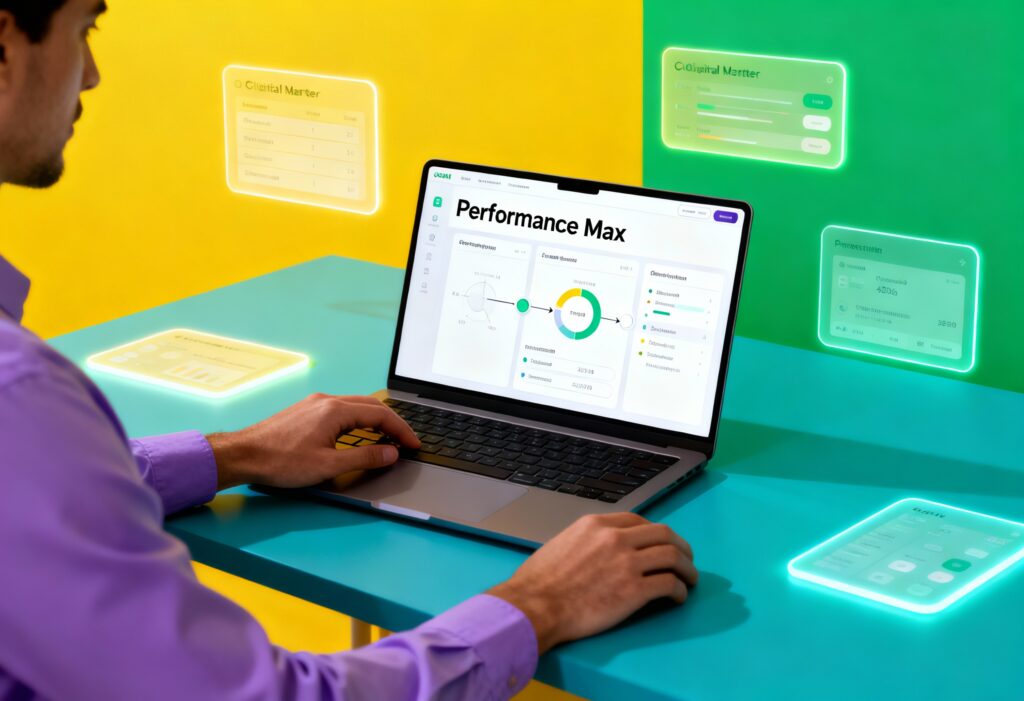
Performance Max Campaigns
Google handles everything, placing your ads across all its channels. If you want to reach without managing every detail, this one’s worth considering.
Local Campaigns
Perfect for bringing people into a bricks-and-mortar store. Your ads show on Maps, Search, and more.
App Campaigns
If you want to know how to advertise on Google apps, this campaign type promotes mobile app installs and engagement.
If you are unsure which campaign type to choose, Yellowball can help you align your advertising with your wider business strategy.
3. Create Your Campaign Structure
After choosing your campaign type, the next step is organising it properly, which matters much more than many people realise. A well-structured campaign gives you more control, better performance data, and far less wasted spend.
Each campaign is made up of ad groups, and each ad group should focus on a specific product, service, or theme. Let’s say you sell furniture online. Rather than lumping everything into one group, you’d create separate ad groups for sofas, dining tables, armchairs, and so on. Each one would have its own tailored keywords and ads that speak directly to what the user is searching for.
This not only makes your ads more relevant, but also makes it easier to see what’s working and where your money’s going. You’ll be able to spot which products are getting you good results and which ones might need adjusting.
At Yellowball, we often start by cleaning up existing Google Ads accounts that are too broad or disorganised, and doing a PPC competitor analysis to make sure you’ve got the edge. Once the structure is in place, everything becomes easier, from writing ad copy to analysing performance. Think of it as laying the groundwork for a campaign that actually delivers.
4. Choose the Right Keywords
If you are learning how to advertise on Google search, understanding how keywords work is a must. These are the words and phrases people type into Google when they are searching for something. Your ad will only show up if your keywords match what they are looking for.
Choosing the right keywords means striking a balance. You want to reach people who are genuinely interested in your offer, without wasting your budget on the wrong audience.
There are three types of keyword match to know:
- Broad match gives you the widest reach. Your ad might show up for searches that are loosely related to your keyword.
- Phrase match is more targeted. Your ad appears when someone searches using your chosen phrase or something very similar.
- Exact match is the most specific. Your ad will only show when someone types in your exact keyword or a very close variation.
Google’s Keyword Planner is a handy tool that helps you discover new keyword ideas, check competition, and see what people are actually searching for.
One more tip — use negative keywords. These let you tell Google what to avoid. If you sell premium bedding, for example, you might want to exclude words like “cheap” to make sure your ads are only shown to the right audience. A little filtering goes a long way when it comes to getting quality clicks.
5. Write Ads That Get Clicks
Google Ads gives you space for three headlines that can be up to 30 characters and two descriptions of up to 90 characters, including spaces. You can also include ad extensions like call buttons, sitelinks, and location info.
When writing ad copy, focus on keeping things short, sweet, and relevant. Include the keyword in your headline if you can. Make your offer clear and encourage users exactly what action you want them to take.
Example:
Headline: Luxury Moisturiser. Natural Skincare.
Description: Made in the UK with pure-grade cruelty-free ingredients.
CTA: Discount on first purchase – Order now!
If writing is not your strong point, Yellowball can help with ad copy that combines creativity with strategy.
6. Set Your Budget and Bidding Strategy
One of the first things most businesses ask is, “How does it cost to advertise on Google?” The truth is, there’s no single answer. The cost to advertise on Google depends on a mix of things, including your industry, how competitive your keywords are, and what you’re hoping to achieve.
The good news is, you’re in control. You set a daily budget that works for you, whether that’s five pounds or five hundred. You’re only charged when someone clicks on your ad, which is why it’s called pay-per-click.
Behind the scenes, Google runs an auction every time someone searches. Your ad’s position isn’t just about how much you’re willing to pay — it’s also about how relevant your ad is. Google gives each ad something called a quality score, which is based on things like your ad copy, the keywords you’re using, and the quality of the landing page it takes people to.
Put simply, the more helpful and relevant your ad is, the better your chances of showing up in a strong position without overpaying. That’s where a bit of strategy goes a long way. At Yellowball, we help businesses make the most of their budget by improving quality scores and bidding smart — not just bidding high.
There are several bidding strategies to choose from:
- Manual CPC: You control the maximum amount you are willing to pay for a click.
- Maximise Clicks: Google aims to get you the most clicks for your budget.
- Maximise Conversion Rates: Focuses on actions like form submissions or purchases.
- Target CPA or ROAS: Optimises for specific cost-per-acquisition or return on ad spend goals.
At Yellowball, our PPC team monitors these metrics closely and adjusts strategies regularly to improve cost efficiency.
7. Build a High-Performing Landing Page
Getting the click is just the start. You need a great landing page that turns interest into action. That means a fast loading page that matches the ad’s promise and gives users a clear next step.
Avoid sending users to your homepage unless it is highly relevant. If your ad is promoting a free consultation, make sure your landing page leads with that message.
Understanding how to most effectively advertise your products and services on Google includes making sure that once people arrive, they immediately see a clear path forward. That could be a form, a phone call, or an eCommerce checkout. That’s why our web design team builds custom landing pages that are designed for performance and usability, not just looks.
8. Launch Your Ads — Then Keep a Close Eye
Getting your campaign live is just the beginning. Once your ads are running, it is time to pay attention to the numbers. This is where the real work starts, and your team needs to keep track of what is working, what is not, and what needs adjusting.
Look at your click-through rate to see if people are actually engaging with your ads. A low number might mean your headlines need more punch or your targeting needs tweaking.
Check your cost per click to make sure you are not overspending for each visitor. High CPCs can eat through your budget fast, especially in competitive industries.
Your conversion rate tells you if those clicks are turning into real results like sales, enquiries, signups, whatever matters to your business.
And don’t forget about impression share. This shows how often your ads are appearing compared to your competitors. If your share is low, you may need to raise your bids or improve your ad quality.
Test different versions of your ads, keep refining your keywords, and look for patterns in your data. Google Ads is not a set-and-forget system — it needs regular attention.
At Yellowball, we work closely with clients to keep campaigns moving in the right direction, delivering fast results while also building steady, consistent performance that grows over time.
9. How to Advertise Your Business on Google for Free
Not every result requires paid ads. If you are wondering how to advertise your business on Google for free, here are some options:
- Google Business Profile: A free listing that helps people find you in local search and Google Maps. If you want to understand how to advertise on Google Maps, this is the place to start.
- Search Engine Optimisation (SEO): This is a longer-term way to show up in organic search results without paying for clicks.
- Content Creation: Blog posts, videos, and guides that bring in search traffic naturally.
- Google Search Console: Use this to understand how your site performs in organic results and find new keyword opportunities.
Knowing how to advertise on Google organic search is just as important as understanding paid ads. Combining the two gives you both immediate visibility and long-term growth.
10. Don’t Let These Mistakes Trip Your Google Ads Campaign Up
Even the best-intentioned campaigns can go sideways if a few basics are overlooked. Before you hit launch, here are some common slip-ups to watch out for.
- Running one generic campaign for everything
- Skipping conversion tracking
- Writing vague or confusing ad copy
- Sending users to irrelevant landing pages
- Ignoring mobile performance
- Setting and forgetting your campaigns
Google Ads can be incredibly effective, but it does take time and expertise to get right. If you have tried before and didn’t get results, or if you are launching your first campaign, working with Yellowball can save you money and accelerate your success.
Turn Strategy into Sales with Smarter Google Ads Campaigns
Learning how to advertise on Google is a smart move for any business looking to grow online. Whether you want to know how to advertise your website on Google, how to use Google Ads more cost-effectively, or how to improve your existing campaigns, it all starts with a solid foundation and ongoing strategy.
Yellowball helps businesses take the guesswork out of PPC. From ad copy and ecommerce landing pages to PPC campaign structure and reporting, we manage the whole process to help you grow faster and spend smarter.
If you want to make sure you’re not wasting any of your budget and you want to see bottom line results, it is time to get in touch – let’s get the ball rolling!