Pay-per-click advertising (PPC) has become one of the fastest ways for businesses to gain visibility online. Yet many business owners face a familiar question: should the budget go to Google Ads or Facebook Ads? Both platforms have enormous reach, but they operate very differently. To make the right choice, it is essential to understand how each works, what type of audience they reach, and how the results can be measured.
Here’s a guide to what PPC is, how Google and Facebook ads work differently, who they work best for, and how businesses can use both strategically.
What Are Google Ads and How Do They Work?
Google Ads is a paid advertising platform where your business can display ads on Google’s search results and partner websites. When someone searches for a product or service, businesses can appear at the very top of the page through keyword bidding. The person then clicks on the ad to explore the product in more detail on a PPC landing page. This is why it is often referred to as intent-driven advertising. A user already demonstrates interest, and the ad simply matches that search intent.
Google Ads PPC campaigns typically include text-based ads on search results, display ads across websites, video ads on YouTube, and even shopping ads with product listings. The strength lies in capturing demand at the very moment a customer is searching.
What Are Facebook Ads and How Do They Work?
Rather than displaying them to people who search for them, Facebook shows ads within the social feed to users who fit specific audience profiles. Advertisers can use demographic data, interests, behaviours, and lookalike audiences to refine targeting.
Ads can appear across Facebook, Instagram, Messenger, and the wider Audience Network. Visual content plays a central role, with images, video, and carousel formats performing strongly. Facebook pay per click ads often generate awareness and build recognition before a user is ready to buy.
Key Differences Between Google and Facebook Advertising
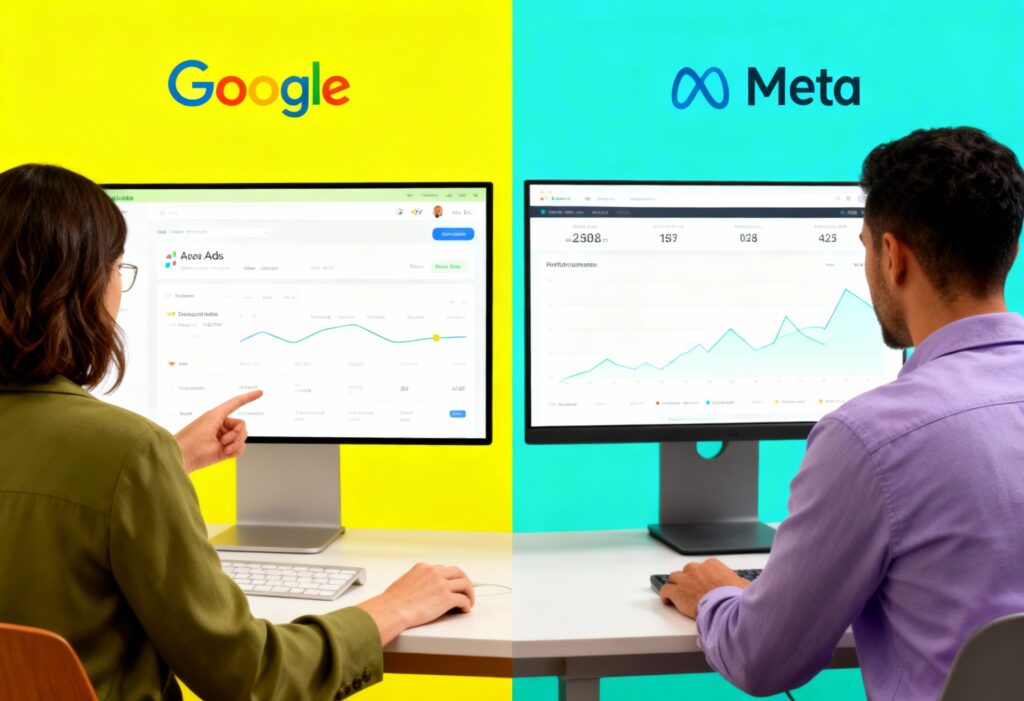
While both platforms are categorised as PPC advertising, they connect with customers in very different ways, influencing how businesses use them. Google Ads uses intent to drive who sees the ad. For example, a user could search for “emergency electrician near me” or “buy running shoes online,” and relevant ads will appear instantly in their search results to match that demand. This makes Google Ads particularly effective for businesses to get the attention of customers who want to act quickly.
In contrast, Facebook Ads are all about using discovery to get leads. So, instead of waiting for someone to actively search for what you offer, your ads will naturally occur in the social feed of users who match your audience. The ads use advanced targeting for demographics, interests, location, and behaviours to help show your ad to the right people. Because of this, Facebook is especially powerful for creating awareness, promoting lifestyle products, or introducing new services that people might not yet know they need.
Another important difference is the format or look of the ad. Google ads are usually text-based and quite plain and direct, although display and shopping ads do have added visual elements. Facebook is the opposite, prioritising visuals and video to grab a user’s attention as they scroll. Ultimately, the choice comes down to whether you want to meet customers when they are actively searching, or whether you want to build recognition and interest before that search takes place.
Measuring Return on Investment
A frequent question from business owners is whether Google Ads are better than Facebook Ads when it comes to ROI. The answer depends on industry, goals, and budget.
One reason many businesses favour Google Ads is the strong conversion potential. Customers clicking these ads are often ready to make a decision right at that moment. That said, popular terms in competitive fields such as finance or legal services can become very expensive. To make campaigns worthwhile, businesses need thoughtful keyword targeting, smart bidding strategies, and ongoing optimisation to avoid paying more than the return justifies.
On the other hand, Facebook advertising can achieve lower cost per click and offer strong reach for brand awareness. However, since users are not actively searching, conversions may take longer. Success comes from consistent targeting, retargeting, and nurturing through the sales funnel.
Studies suggest that businesses with a longer sales cycle often find Facebook advertising more valuable for nurturing relationships, while those with urgent services or products see faster ROI with Google.
Are Facebook Ads Worth It?
Many small businesses question whether Facebook Ads PPC is still worth the spend. But the reality is that while organic reach on Facebook has declined, paid ads continue to deliver strong results when managed strategically. Facebook’s integration with Instagram provides access to visual platforms where consumer attention is high. Businesses that invest in testing creatives, refining audiences, and tracking conversions often see consistent returns.
Are Google Ads Worth It?
So, are Google Ads worth the budget? The answer depends on how competitive the keywords you’re targeting are and whether ads are being optimised correctly. For local service providers, retail businesses, and e-commerce stores, appearing at the exact moment a customer is searching provides unmatched visibility. Even with higher costs, the immediate actions users take and the quick ROI often justifies what they spend.
Creating an Integrated PPC Strategy
The real strength comes when businesses use Google and Facebook advertising in combination. A customer might discover your brand on Facebook and then later search for your product on Google. Running both platforms together allows you to capture both awareness and conversion.
For example, a new clothing brand might use Facebook to promote lifestyle videos and build recognition. Then, Google Ads PPC campaigns could capture those users once they begin searching for the product category. Retargeting across both platforms ensures no opportunity is missed.
Best Practices for Choosing the Right Platform
So, when your business is weighing up the pros and cons of Google Ads or Facebook Ads, consider the following:
- Business Goals
- Google Ads: Best for immediate leads or sales because it connects with people actively searching.
- Facebook Ads: Better for brand building and creative storytelling that develops awareness over time.
Budget
- Start small on both platforms to test performance.
- Scale up spending where ROI is strongest rather than committing heavily upfront.
Industry Fit
- Service-based businesses, such as legal, trade, or healthcare, often perform better on Google due to intent-driven searches.
- Lifestyle, retail, and visual industries thrive on Facebook because of its creative formats and audience targeting.
Customer Journey
- If decisions happen quickly, Google captures ready-to-buy customers.
- If purchases involve more research and consideration, Facebook’s retargeting and nurturing tools keep your brand top of mind.
Why Work with Experts
Both platforms require ongoing management, testing, and analysis. Businesses that run campaigns without optimisation often waste budget and miss valuable opportunities. At Yellowball, we specialise in tailoring strategies that balance Google Ads PPC with Facebook Ads PPC, using data-driven insights to achieve measurable growth. Our team has experience running campaigns across multiple industries and can advise on how to structure campaigns for maximum ROI.
From Search to Social: Find Your PPC Balance
Choosing between Facebook advertising vs Google advertising does not have to be an either-or decision. The best results often come from using both strategically. Google captures active demand, while Facebook creates awareness and nurtures audiences. Business owners should start with clear goals, test campaigns, and adapt based on results.
For those unsure where to begin, partnering with experienced PPC specialists ensures that budgets are allocated effectively and campaigns deliver real outcomes. At Yellowball, we help UK and global businesses navigate the complexity of digital advertising, making sure every click counts. With our help, businesses have seen a 157% increase in clicks in just 3 months, a 63% increase in conversions, and an impressive 7.58 conversion rate in just two weeks. If that sounds good to you, get in touch with us and let’s get the ball rolling!